
The World You
Think You Know
Was Written
by Someone Else.
"A rigorous, unsettling excavation of how consensus shapes what we believe is possible." — A book for those who read to be disturbed.
Who decides which questions are worth asking?
The obsession began in a library archive in 2019, surrounded by boxes of correspondence no one had opened in forty years. Inside was a pattern: ideas that had shaped entire fields of thought, traced back not to the minds credited with them, but to the conversations, the collaborations, the half-finished letters from people history had quietly erased.
What followed was six years of research across four continents, seventy-three interviews, and a growing conviction that the stories we tell about where ideas come from are almost always incomplete — and that the incompleteness is never accidental.
This book is not a polemic. It is a forensic investigation. It asks the reader to do something genuinely difficult: to sit with the possibility that the intellectual inheritance they have spent a lifetime building was curated for them — and then to ask what they might build instead.
From the author's notebooks
"The archive doesn't lie. But it doesn't tell the whole truth either. It tells the truth of whoever decided what was worth keeping."
"Six years of research, one persistent question: what gets remembered, and why."
6
Years of research
73
Original interviews
4
Continents covered
Available February 2026 · Hardcover · 368 pages
Find your book →Chapter One — The Archive Problem
The problem with archives is that they are not neutral. Every box that survived did so because someone, at some point, decided it was worth preserving. Every box that did not survive was allowed to deteriorate, to flood, to burn — by the same logic operating in reverse. The archive is a series of editorial decisions made by people who are now dead, about what the future would want to know.
I spent four months in the reading room before I understood this. I was looking for evidence of a particular argument — the argument that a certain idea had originated somewhere other than where the textbooks placed it. What I found instead was evidence of the argument's disappearance: letter after letter, removed from the sequence, the gaps in the numbering as legible as the letters themselves.
Someone had been very careful. Someone had known exactly which sentences, preserved, would change everything.
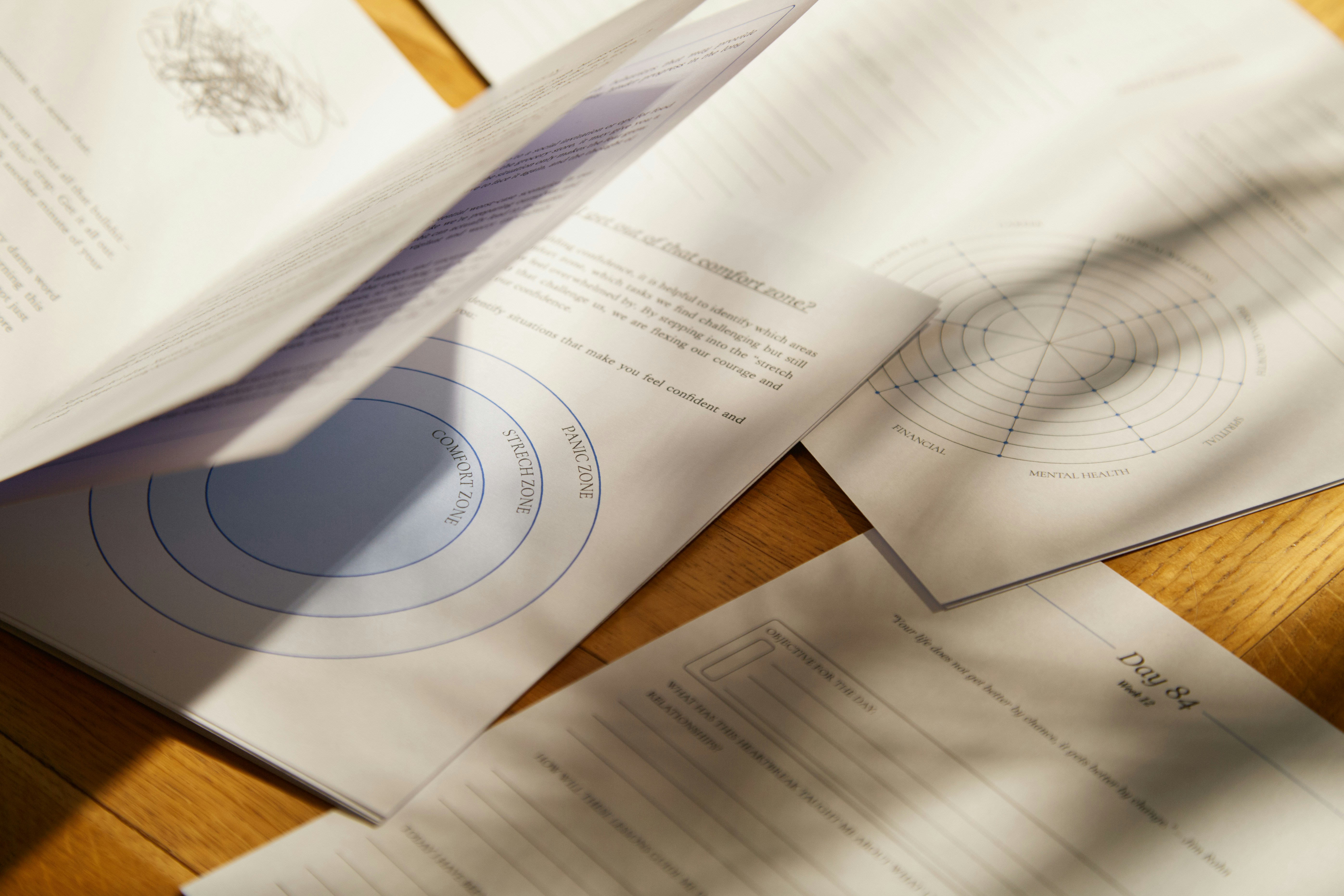
Research notes, 2021 — National Library Archive, London
"Every consensus was once a controversy. Every controversy was once unspeakable. This book lives in that gap."
The Structure of Scientific Revolutions
Thomas S. Kuhn
The book that first made me suspicious of consensus.
Invisible Cities
Italo Calvino
Fiction that taught me more about memory than history did.
The Shock Doctrine
Naomi Klein
How to make the invisible machinery of ideas legible.
Ways of Seeing
John Berger
Forty pages that permanently altered how I read an image.
Thinking, Fast and Slow
Daniel Kahneman
The architecture of a mind that believes what it is told.
Discover Your Reading Profile
Five questions. Literary language. A genuine match between your intellectual obsessions and the book most likely to reframe how you see the world. Takes about two minutes.
5
Questions
4
Book profiles
1
Free chapter
"The kind of book that makes you want to call someone at midnight and read a paragraph aloud."
— The New York Times Book Review
"A forensic, morally serious book. The kind of non-fiction that makes you embarrassed by everything you thought you already understood."
The Atlantic
"Reads like a thriller, argues like a philosopher. I bought four copies before finishing the first chapter."
Priya Mehta
Host, The Long View Podcast
"The most important book about intellectual history published in a decade. Required reading for anyone who thinks seriously about how ideas move through the world."
The New York Review of Books
"I underlined something on almost every page. Then I went back and underlined the underlines."
Daniel Okafor
Professor of History, Columbia University
As featured in
Find the book that will change what you think is possible.
Discover Your Reading Profile